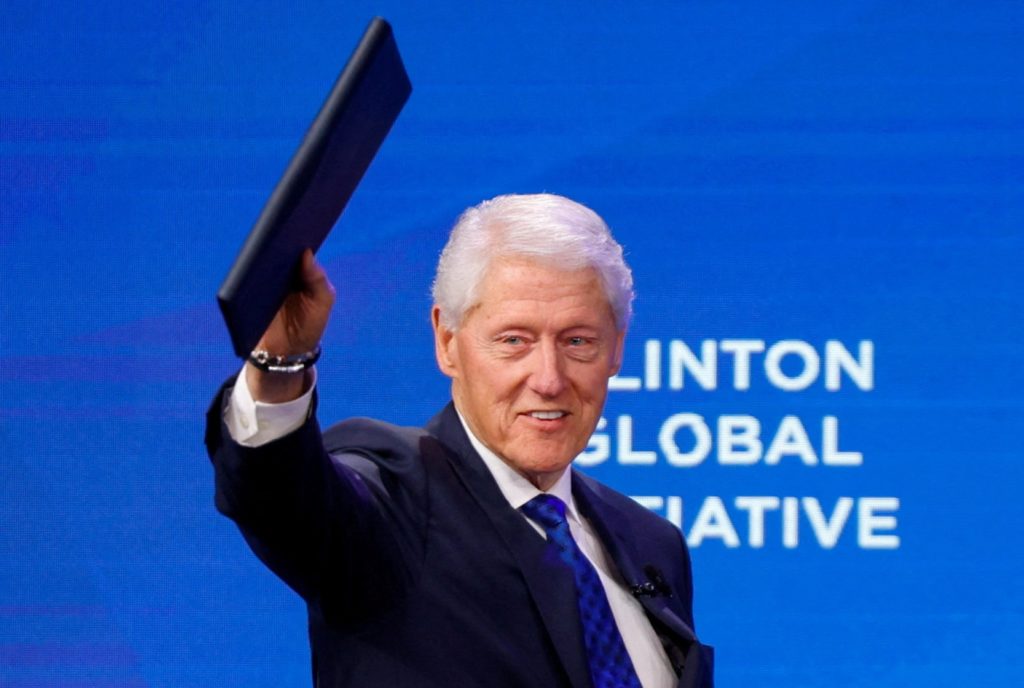
Bill Clinton's Epstein Statement: A High-Stakes Defense
The ghost of Jeffrey Epstein continues to cast a long shadow, ensnaring even former world leaders in its web of controversy. When former President Bill Clinton delivered his six-hour, closed-door testimony before Congress regarding his past connections to the convicted sex offender, the world watched closely. More specifically, the public scrutinized his pre-released
opening statement, a document that served not just as a prelude to his testimony but as a carefully crafted, high-stakes defense designed to shape public perception and establish his narrative from the outset.
This was no ordinary statement; it was a masterclass in strategic communication, blending legal positioning with a powerful appeal to personal integrity and public service. Understanding the nuances of this
opening statement requires an appreciation for how such declarations function, both in and out of a traditional courtroom.
The Strategic Art of an Opening Statement in High-Stakes Settings
In a conventional legal trial, an
opening statement is a critical phase where attorneys outline their case to the jury. It's a narrative, a roadmap of what they intend to prove, designed to capture attention and frame the evidence that will follow. Crucially, as legal experts often emphasize, anything said in an
opening statement is *not* evidence itself. It's argument, an interpretation of facts, setting the stage for witnesses, documents, and recordings that will constitute the actual evidence. For a deeper dive into this distinction, read our article:
Opening Statements vs. Evidence: What Juries Must Know.
Bill Clinton's appearance before the House Oversight Committee, while not a criminal trial, borrowed heavily from these principles. His publicly released
opening statement served several strategic purposes:
-
Setting the Narrative: It allowed him to define the parameters of his testimony and present his version of events before any questions were posed. This proactive approach aims to control the initial impression.
-
Damage Control: By addressing potential criticisms head-on, he sought to mitigate negative press and pre-empt hostile questioning.
-
Establishing Credibility: Through a direct, personal tone, he aimed to build trust with both the committee and the wider public.
-
Clarifying Intent: He articulated *why* he was there and *what* he hoped to achieve, portraying himself as a cooperative participant dedicated to justice.
This strategic use of an
opening statement underscores its power in any forum where public opinion and scrutiny are paramount. It's about shaping the battlefield before the main conflict begins.
Clinton's Defense: Denials, Distress, and a Call for Truth
In his
opening statement, released on X (formerly Twitter) alongside his testimony, Clinton articulated a forceful defense, characterized by direct denials and a powerful expression of regret. He stated, “
As someone who grew up in a home with domestic abuse, not only would I not have flown on his plane if I had any inkling of what he was doing — I would have turned him in myself and led the call for justice for his crimes, not sweetheart deals.” This deeply personal revelation aimed to align him with victims and distance himself unequivocally from Epstein's heinous acts.
His core assertions were unequivocal: “
I saw nothing, and I did nothing wrong.” This statement was a direct challenge to the committee and the public, asserting a complete lack of knowledge or complicity in Epstein's criminal activities. He emphasized that he had ended his association with Epstein years before the financier's crimes became public, a critical timeline detail intended to show his dissociation.
Clinton also underscored the voluntary nature of his appearance, declaring that “
no person is above the law, even presidents.” This move sought to portray him as a principled citizen cooperating with an important investigation, aiming to restore public trust and prevent similar crimes. He pledged to “
offer what little I know” truthfully and “
consistent with the facts as I know them,” a careful legal phrasing that limits the scope of his testimony to his personal recollections and understanding, rather than speculative or unverified information. Such precise language is common in high-stakes legal and political contexts, allowing individuals to affirm their commitment to truth without overstating their knowledge.
A Fierce Defense of Hillary Clinton
One of the most striking elements of Clinton's
opening statement was his impassioned defense of his wife, former Secretary of State Hillary Clinton. He declared, with a palpable sense of indignation, “
Before we start, I have to get personal. You made Hillary come in. She had nothing to do with Jeffrey Epstein. Nothing. She has no memory of even meeting him. She neither traveled with him nor visited any of his properties.” He continued, asserting that her subpoena was "simply not right."
This segment served multiple purposes:
-
Protecting a Spouse: Foremost, it was a husband defending his wife from what he perceived as an unfair and politically motivated inquiry.
-
Shifting Focus: By expressing strong disapproval of Hillary's compelled appearance, Clinton potentially aimed to shift some of the committee's focus, and public sympathy, towards what he framed as an overreach.
-
Reinforcing Narrative: By vehemently denying Hillary's connection, he further solidified the narrative that *neither* he nor his family had any involvement or awareness of Epstein's criminal enterprise.
This personal appeal added an emotional layer to an otherwise fact-focused statement, undoubtedly designed to resonate with those who value family loyalty and perceive political motivations behind such investigations.
Navigating Public Trust and Accountability
Clinton's
opening statement also contained a powerful call for accountability, directed not just at himself but at the committee members. He reminded lawmakers that, just as he was bound by sworn testimony, “
each and every one of you owes nothing less than truth and accuracy to the American people.” This served as a subtle yet firm challenge, urging the committee to conduct its inquiry with integrity and avoid political grandstanding.
The former President's strategy highlighted the delicate balance between personal defense and a broader commitment to public service. His statement attempted to bridge the gap between his personal association with Epstein and the public's demand for full transparency in the wake of such horrifying crimes. The goal was clear: to leverage the power of an
opening statement not just to defend himself, but to contribute to what he claimed was a larger mission of justice and prevention.
Beyond the Testimony: Lessons from a Powerful Opening Statement
The intense scrutiny surrounding Bill Clinton’s
opening statement offers valuable insights into effective communication in high-pressure situations. For anyone facing public questioning or attempting to shape a narrative, whether in a legal setting, a corporate crisis, or a public relations challenge, the principles remain consistent.
Key takeaways from Clinton's approach include:
-
Proactivity: Releasing the statement ahead of time allowed him to seize control of the narrative before the hearing began.
-
Clarity and Consistency: His core message – "I saw nothing, and I did nothing wrong" – was simple, direct, and reinforced repeatedly.
-
Empathy and Personal Connection: Drawing on his personal experience with domestic abuse added a layer of human connection and underscored his abhorrence of Epstein's actions.
-
Strategic Framing: Emphasizing voluntary cooperation and a commitment to public trust positioned him favorably.
-
Anticipating Objections: Directly addressing the issue of Hillary Clinton's involvement pre-empted potential lines of questioning.
An effective
opening statement is more than just a recitation of facts; it’s a strategic act of persuasion and perception management. It demonstrates the enduring power of language and narrative in shaping how individuals and events are understood. To learn more about crafting compelling narratives, explore our article:
Beyond Testimony: The Power of an Effective Opening Statement.
Conclusion
Bill Clinton's
opening statement on his connections to Jeffrey Epstein was a quintessential example of a high-stakes defense. It was a carefully constructed public declaration designed to manage public perception, pre-empt criticism, and assert a narrative of innocence and cooperation. By blending legal strategy with personal conviction and a strong defense of his family, Clinton leveraged the power of an
opening statement to navigate one of the most challenging public inquiries of his post-presidency. The lasting impact of his words will continue to be debated, but their strategic intent is undeniably clear.